THE 3D NEWS NETWORK


London, UK


How much attention did the Queen’s funeral draw?


BBC claimed 4.1 billion viewers watched the event before they quickly deleted the facebook post after they couldn’t provide any evidence

2,000 guests including representatives from 168 countries, 18 monarchs, 55 presidents and 25 prime ministers, making it one of the largest gatherings of world leaders in history.

Sky News sent 40 camera crews, fielded 275 cameras and deployed a helicopter.

BBC fielded 213 cameras, plus remote cameras inside the Abbey and St George’s, and used 14 outside broadcast trucks, transmitting from 10 locations and in 6 different languages.

And yet attracted less viewers than the 2020 Euro Finals in the UK.


During the Queen’s Elizabeth funeral:


A mass grave of 440 bodies was discovered in Izium

Russia committed 100 attacks on Ukrainian civilians

Russia committed 101 air or drone strikes on Ukraine

A 148 armed clashes between both armies took place

Russian forces launched eight cruise missiles at the dam of the Karachunivske reservoir causing extensive flooding in Kryvyi Rih and a 2.5 metres (8 ft) increase of water level in the Inhulets River.

The United States announced a $600 million aid package for Ukraine, including additional HIMARS ammunition, "tens of thousands" of 105 mm artillery rounds, one thousand 155 mm rounds, counter-drone systems, winter gear, and night vision devices.

BM-21 missiles and heavy artillery shelled Nikopol, injuring 1 and damaging 11 high-rise buildings, a kindergarten, a school, gas furnaces, and power lines.

Rocket strike near the South Ukraine Nuclear Power Plant


London
Westminster Hall


MA Degree Project
SOFTWARES:
  • 1. Polycam
    2. Sketchfab
    3. Spatial Media Metadata Injector
    4. Renderdoc
The 3D News Network is a digitally based project aimed to alter the everyday perspective to the general news we are offered. The project was inspired from a collection of objects found in 3D scanning applications (Polycam), particularly in the multi-dimensional archiving of Ukrainian war debris such as bomb craters,  bullet hole ridden vehicles, destroyed Russian tanks and many more testifying to the horror of the war. The visceral nature of 3D scanning as a form of real-time news reporting has transformed the way individuals experience and document pertinent issues surrounding contemporary life. 3D News Network is thus a direct response to this mass media revolution, performing as a collection of news headlines throughout 2022 centred around the funeral of Queen Elizabeth in September 2022. Being a foreigner living under the influence of British news and media throughout my past 4 years in London, the scale of news coverage of the funeral was both inevitable and fiercely publicised on both social media and traditional media platforms worldwide. In light of the devastating political conflicts occuring around the world during that same time, the scale of media coverage focused on the Queen’s death felt somewhat disproportionate and heavily dissociated from the socio-political chaos of the world.


Process:


This whole project started because of my research into the Queen’s funeral and how ambiguous many of the sources are, as well as how the media covered the event. In fact, most of the news related to it focused on prior speculation. A large number of articles published during or after that week relied heavily on the same concrete data, such as the number of viewers in the UK or the number of officials who came to pay their respects. However, many other figures were either distorted or presented as broad estimates without proper fact-checking.

One of the main examples of this was the alleged 4.1 billion global viewers. This figure even appeared in a BBC Facebook post, which was deleted shortly after publication when viewers began questioning the credibility and source of the claim. According to a Full Fact article, there is no evidence or research supporting a total global viewership figure, and the number itself originated as a pre-event estimate from a radio host.

Even though this figure is no longer used in news broadcasts, many articles based on these earlier estimates remain available, creating the impression that such numbers were confirmed.

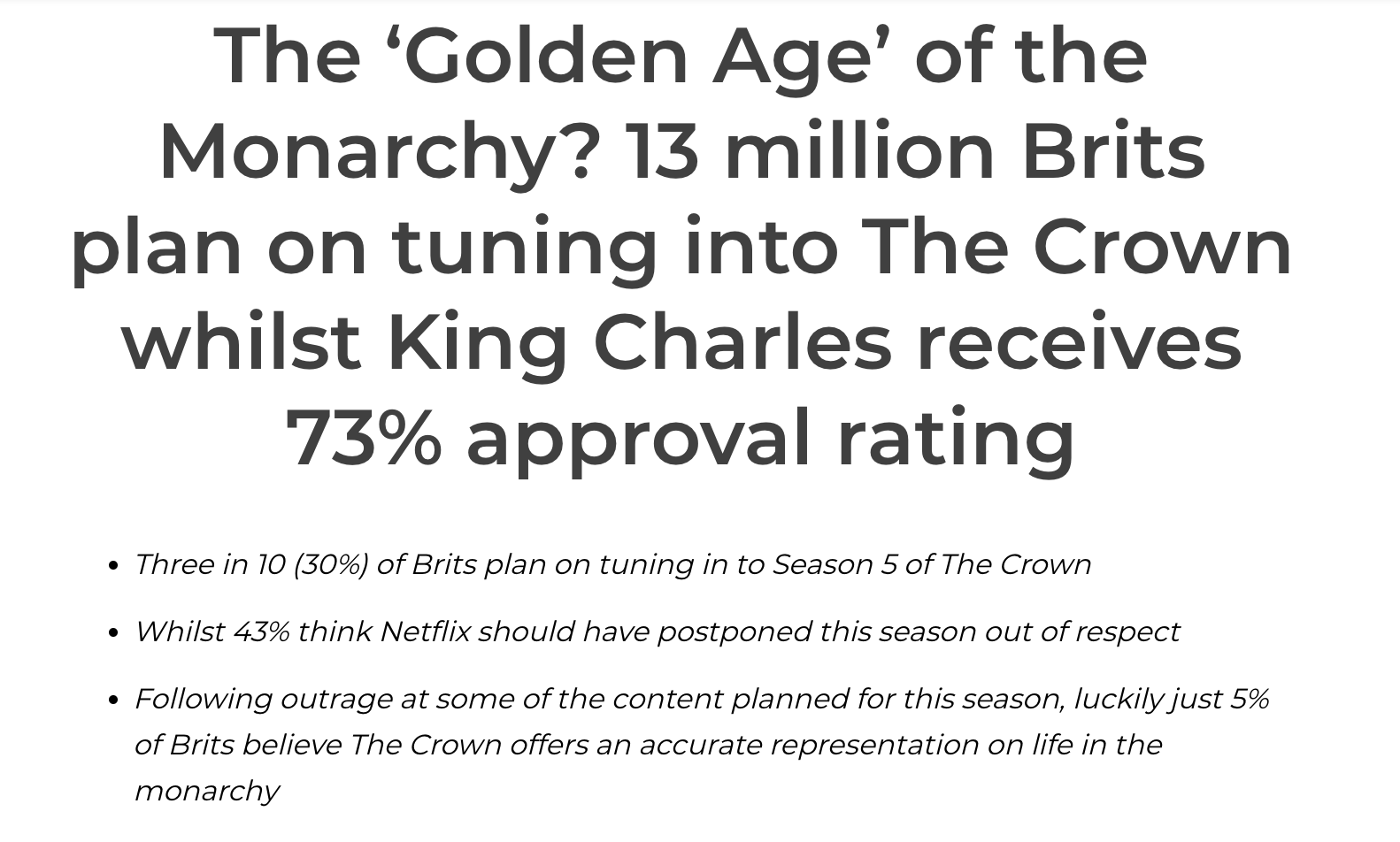
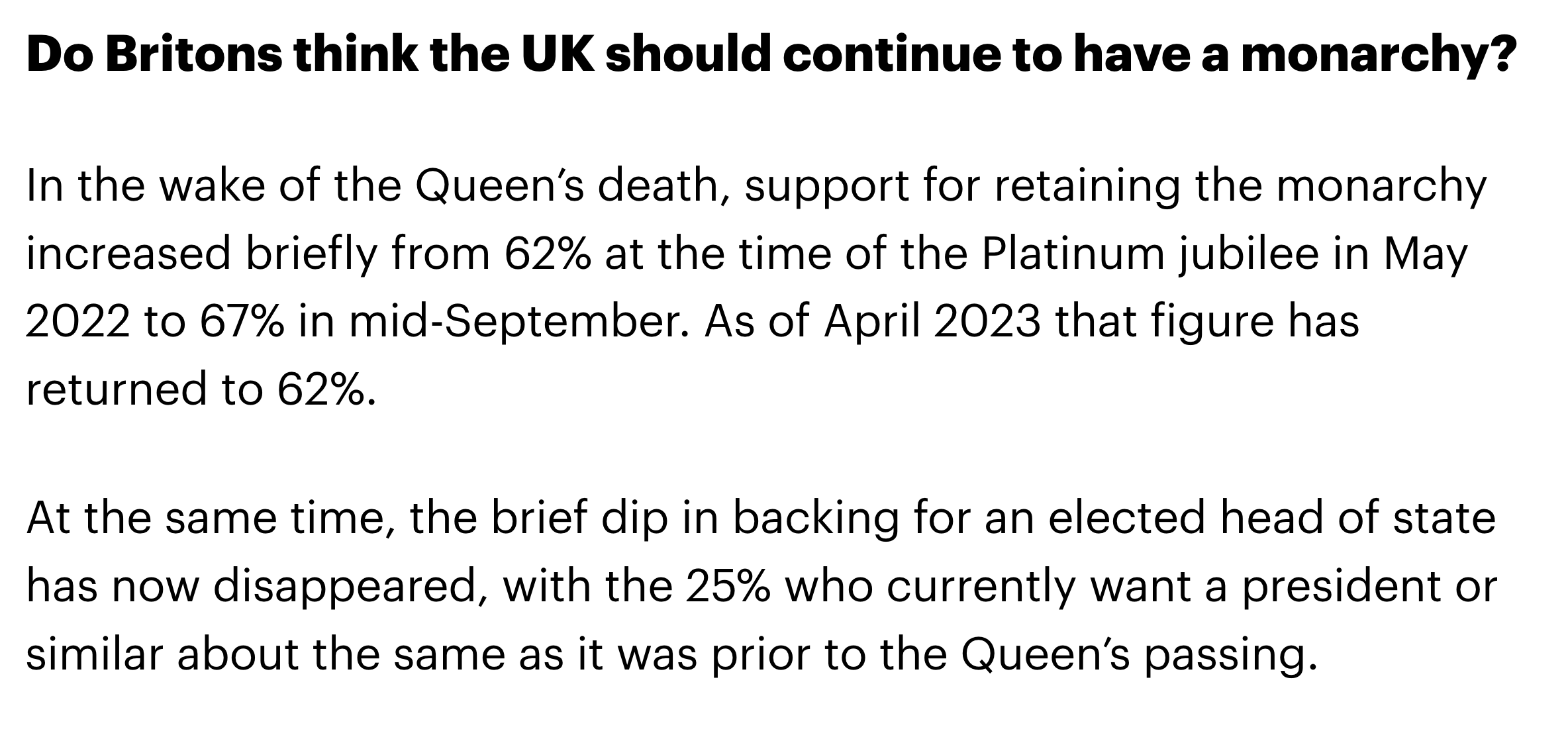
This event also created a very polarising question: how do British people now feel about the monarchy? 


According to The Guardian:


YouGov:


CNN:


National Center for Social Research:


CBS:


UK in Changing Europe:


Statista:


Momentive:


Even when the numbers themselves are quite similar from one source to another, or even drawn from the same poll, the difference in interpretation is drastic. Some describe it as the end of the monarchy, while others call it a Golden Age. Even if the true answer may be extremely complex or may not exist at all, the point is how the Queen’s funeral generated deeply polarising opinions, with everyone attempting to reinterpret this emotional and cultural event.

For the making of this project, I used a variety of software, open-source archives, and techniques for each world. To import data from Google Earth, I used an application called RenderDoc, which scans specific areas containing 3D information. I then worked in Blender for the remainder of the project.

For the news coverage world, I sourced material from YouTube, major media websites such as the BBC, and by scrolling through thousands of images on Google Images to find footage covering the Queen’s arrival and departure at Westminster Abbey. In the end, most reporters were positioned in the same location, which did not provide much variety, but I was able to find rarer shots from the sides and from helicopters later on. I then projected as many images as possible onto the map to create a sense of density and evoke the weight of the media coverage surrounding the event. I carefully matched each image to the Google Earth file, respecting factors such as angle, lens size, distance, and physical references like buildings and trees.

 Example of footage:


For the war in Ukraine in Westminster, I gathered as much 3D documentation as possible. The main software I used was an open-source 3D scanning application called Polycam. Since the start of the war, Polycam has collaborated with the Danish National Committee of UNESCO, Blue Shield Denmark, Polycam, and Vice Media Group, in close partnership with Ukraine’s Heritage Emergency Rescue Initiative and the National Museum of the History of Ukraine. This large-scale project aims to preserve Ukraine’s cultural heritage and document the atrocities of the war.

This form of documentation was new to me, and what struck me most was the immersive dimension of the data. It is no longer just about seeing what happened, but about being able to move around it, analysing every inch of the scanned elements. I also downloaded scans from Sketchfab, an open-source platform for all kinds of 3D models. On this platform, many large architectural agencies work with drone footage and generate models through photogrammetry. They share these models for free, as they are also contributing to the preservation of Ukraine’s cultural heritage. These more precise and detailed models were a valuable addition to the project, as it is much more difficult to scan buildings—especially damaged or demolished ones—using Polycam alone.

In order to create a contrast with the ten days of national mourning and what was happening in Ukraine during that same period, I decided to incorporate these scanned elements into the Google Earth file. I wanted to highlight the difference in media attention between a royal funeral and a mass grave in Ukraine that was discovered during that week, which provided some of the first evidence of war crimes and crimes against humanity committed by Russian forces.

Example of model: